ServicesPaint and Refinishing
Paint and Refinishing in Dinuba
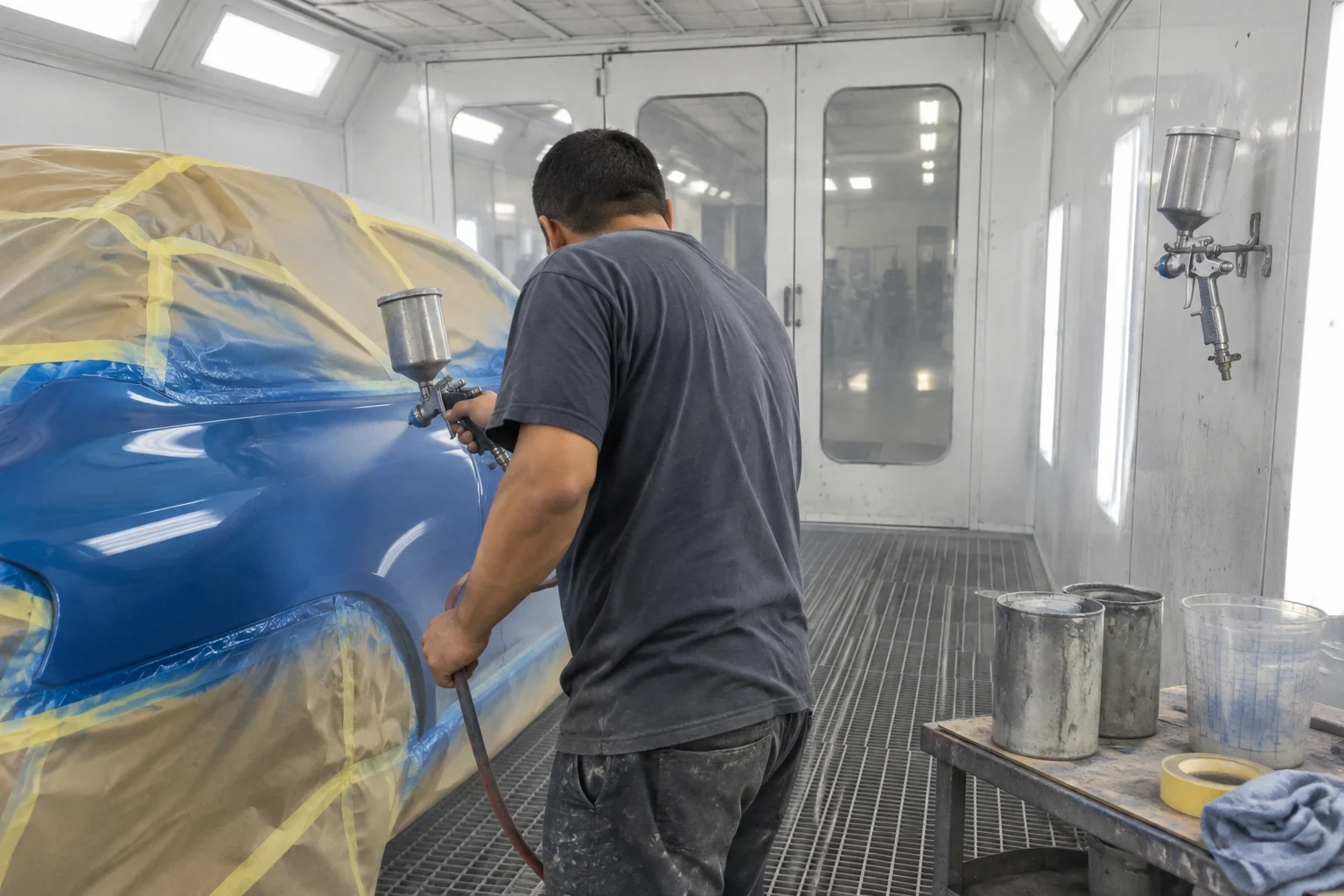
Peeling clearcoat, a deep scratch or a panel that never quite matched after an old repair. We sand it down to sound material, match your car's color from its paint code and test cards, and refinish it so the panel blends with the rest of your vehicle.
What Paint and Refinishing Means for Your Car
Most cars built in the last few decades wear two layers you can see: a thin basecoat that carries the color and a clearcoat on top that gives the shine and blocks the sun. When the clear fails, the color underneath fades and chalks quickly. Refinishing means removing the damaged layers, rebuilding the surface and laying down new color and clear that match the panels around it.
Not every car gets the same materials. An older work truck may have single-stage paint, where color and gloss are one layer. Many newer cars use metallic or pearl tri-coat finishes that need an extra mid-coat to match. We tell you which one your vehicle has and what that means for the repair before any work starts.
Long, hot summers in the Valley are hard on clearcoat, especially on roofs, hoods and trunk lids. If yours has started to haze or flake, catching it early usually keeps the job smaller.
What the Work Includes
- 01
Color matching from your paint code
We pull the code from your door jamb, mix the color and spray test cards to compare against your car in daylight. Factory colors vary slightly from batch to batch and fade with age, so the card check matters more than the code alone.
- 02
Surface prep down to sound material
Failed clear, loose paint and surface rust come off first. We then build the area back up with primer-surfacer and sealer so the new color has a flat, stable base.
- 03
Basecoat and clearcoat application
Color and clear go on in a spray booth to keep dust out of the finish. Plastic parts like mirror caps and bumper covers get an adhesion promoter so the paint flexes with the part instead of cracking.
- 04
Blending into neighboring panels
Metallic and pearl colors can look different from an angle even when mixed correctly. We fade new color into the adjacent panel so your eye does not catch a hard line at the seam.
- 05
Cut, polish and final check
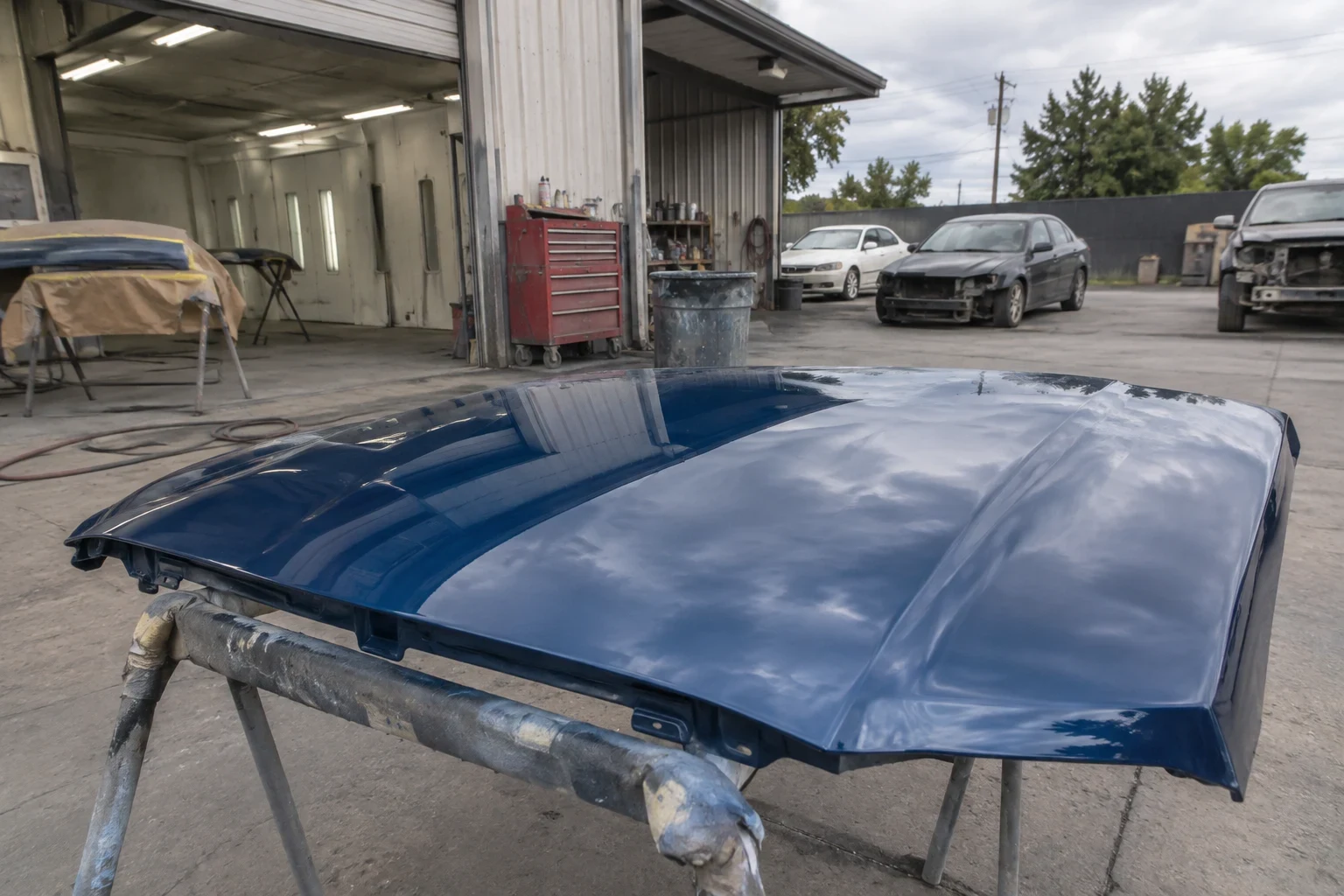
Once cured, the new clear is wet-sanded where needed and polished to match the texture of the original finish.
Questions about Paint and Refinishing?
Call(559) 524-1389Signs Your Paint Needs Attention
Clearcoat peeling or turning white
Cloudy patches or flakes lifting at the edges mean the clear has let go. It will keep spreading, and the color under it fades fast once it is exposed.
Chalky, faded color
If a red now looks pink or a black looks gray, the paint has oxidized. Polishing can help when the damage is shallow; deeper fading needs a refinish.
Scratches you can catch with a fingernail
A scratch that reaches primer or bare metal lets moisture in. On steel panels that is how small rust spots start.
Bubbles along edges or wheel arches
Raised blisters often mean rust is working under the paint. Those spots have to be cut back to clean metal before any new color goes on.
A panel that never matched
An earlier repair that looks off in sunlight usually used the wrong variant of the color or skipped blending. We can correct it.
How a Refinish Job Runs
- 1
Look it over together
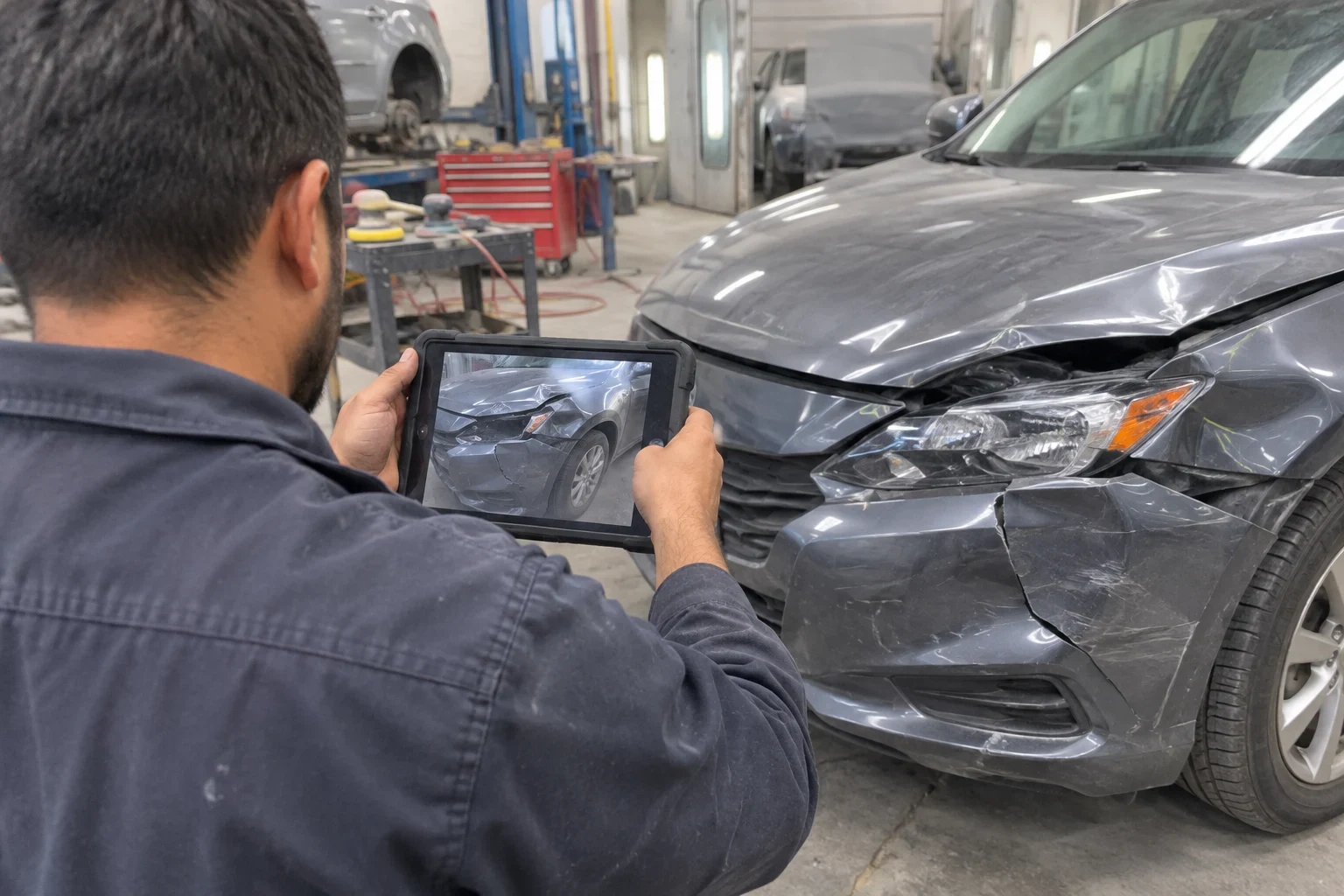
You bring your car to our shop and we walk around it with you. We point out what is cosmetic and what needs real repair, and we explain the paint type and the options for your car.
- 2
Prep and masking
We wash and degrease the panels, sand out the damage, treat any bare metal and prime. Everything that is not being painted gets masked off, including trim, glass and lights.
- 3
Spray and cure
Color and clear are applied in the booth and cured with heat so the finish hardens properly instead of staying soft.
- 4
Polish and hand back
We color-sand any texture, polish the panels and check the match outdoors. Then we go over the work with you and share care instructions for the first few weeks.
What Moves the Price
Paint work is priced on what your car actually needs, not on a flat rate per panel. We explain every line of the estimate so you can see where the cost comes from. A few things make the biggest difference.
- How many panels, and blending
- One door costs less than a door, fender and quarter panel. Blending into a neighboring panel adds labor but is often what makes the repair invisible.
- Your color type
- Solid colors are the most straightforward. Metallics take more care to match, and tri-coat pearls need an extra layer and more test cards.
- What is underneath
- Failed clearcoat sometimes has to be stripped completely rather than sanded, and rust has to be cut out. We can only see some of this once sanding begins, and we will talk with you before doing extra work.
- Spot repair or full refinish
- A small scratch can sometimes be spot-repaired. Widespread sun damage on a roof or hood usually calls for refinishing the whole panel.
Common Paint and Refinishing Concerns
How close will the repainted panel be to the original color?
Your paint code is only the starting point, because factory paint shifts a little with age and sun. We spray test cards and hold them against your car outdoors before mixing the final batch. On metallic and pearl colors we also blend into the neighboring panel, so the repair is hard to spot even from a few feet away.
Can you just spray new clear over the peeling spots?
Not if you want it to last. Fresh clear laid over failing clear tends to lift right along with it, often within a season. We take the failed layer off down to a stable surface first.
My older truck has single-stage paint. Should I switch to basecoat and clear?
That depends on how much of the truck is being painted. For one panel, matching the existing single-stage keeps it consistent with everything around it. For a refinish of most of the vehicle, basecoat and clear stands up better to strong sun. We explain both routes so you can pick.
How soon can I wash or wax my car?
A gentle hand wash is fine once you drive it home. Skip automatic car washes and hold off on wax for the first several weeks while the clear finishes curing.
Will insurance pay for paint work?
When the paint damage came from an accident or other covered event, it is usually part of the insurance claim. Sun fading and age wear generally are not covered. Our Insurance Claims page explains how we work with your adjuster.
Let's Look at Your Paint Together
Describe the peeling, fading or scratch over the phone, and we will walk you through the paint options for your car and how the job would run. Drivers from Reedley, Orosi and other nearby towns bring their vehicles to our shop for refinishing.