ServicesCollision Repair
Collision Repair in Dinuba
After a crash, you want your car back looking right and driving straight. We repair panels, replace what can't be saved and explain each part choice in plain words, so you know what is going on your vehicle before work starts.
When collision repair is the right call
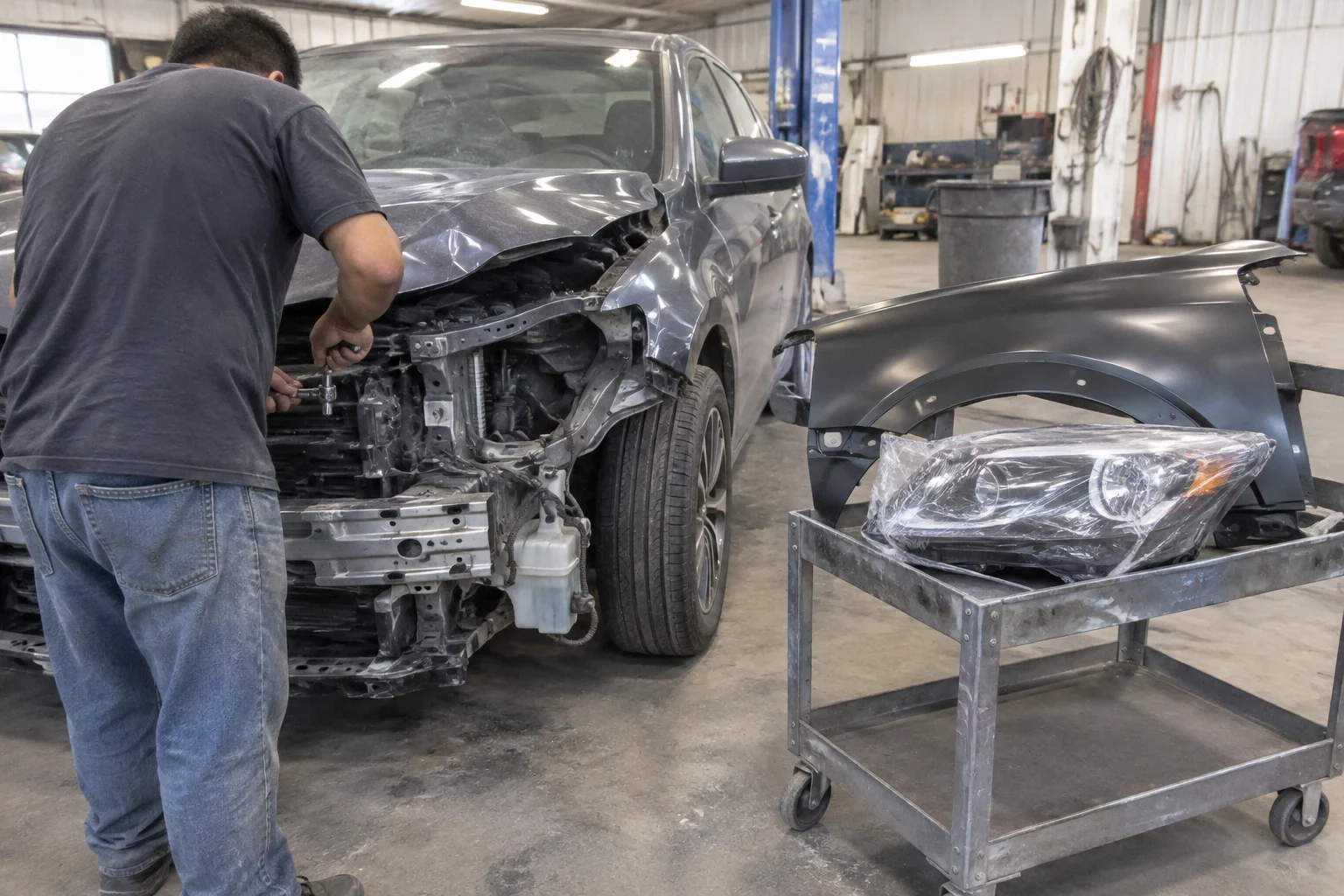
After an accident, collision repair puts back everything the impact disturbed: crumpled panels, broken lights, bent supports, cracked plastics and the finish over all of it. A light hit might only need a door skin and a bumper cover. A harder one may mean measuring the hidden structure and pulling it back into place before any outer panel goes on.
Modern cars mix materials. A hood might be aluminum, the fenders steel, the bumper a plastic cover over a foam absorber and a steel or aluminum bar. Each one bends, tears and repairs differently, and that changes what we can fix versus what we replace. We walk you through those choices instead of handing you a total and a shrug.
If the damage is limited to a few dents with intact paint, our dent repair page may fit better. For bigger hits, this is the place to start.
What we handle during the repair
Damage teardown
We remove trim and panels around the impact to find damage hiding behind it. Brackets, clips and sensors often break where you can't see them from outside.
Steel and aluminum panel work
Steel can often be worked back into shape. Aluminum stretches and work-hardens, so it needs separate tools and gentler handling, and it is replaced more often.
Plastic bumper and trim repair
Small tears and scuffs in plastic covers can usually be repaired. Broken mounting tabs or deep cracks near sensors usually mean a new cover.
Parts choices explained
We tell you whether a part is from the original maker, aftermarket or used, and how fit and finish compare. You decide with the trade-offs in front of you.
Structural measuring
A hard enough hit can shift the structure your panels bolt onto. In that case we check its dimensions against the factory specs and bring it back into line before new panels go on. Our frame straightening page covers that step in more detail.
Paint and color matching
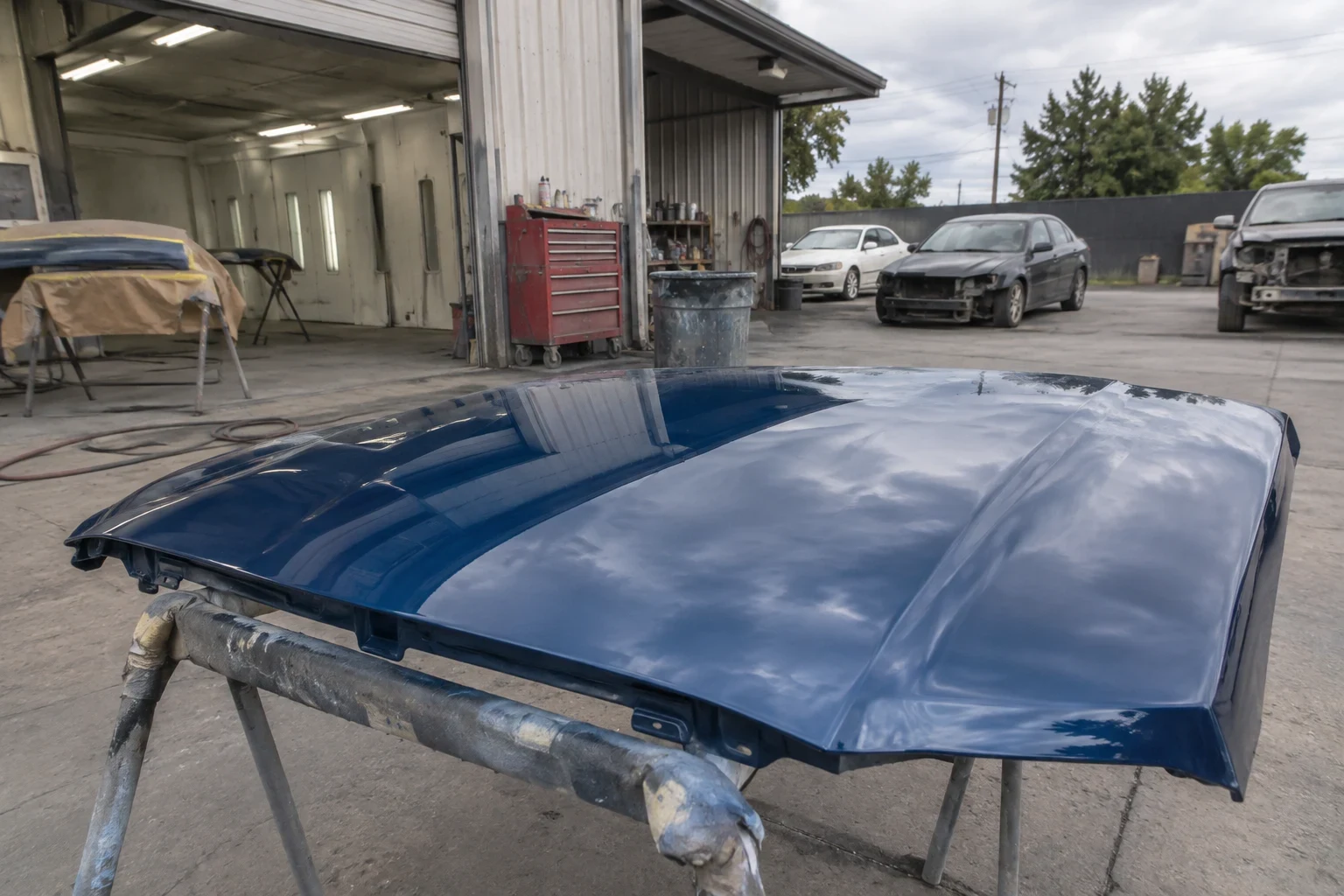
Every new or reworked panel gets primer and color, then we fade the finish into the surrounding body so there's no visible line where old paint meets new. In daylight, your car should look like it came off the lot in one piece.
Signs your car needs more than a quick fix
- Gaps that don't line up
- If a door, hood or trunk lid sits higher or wider than before, something behind it has likely moved.
- The car pulls or the wheel sits crooked
- A front-corner hit can bend suspension parts or shift mounting points. That affects tire wear and how the car tracks.
- Doors or the trunk are hard to close
- Binding or extra effort usually points to a bent opening, not just a bent panel.
- Warning lights after a minor bump
- Parking sensors and cameras live in bumpers and grilles. A light tap can knock them out of position or break their brackets.
- Cracked paint around a dent
- Once paint cracks, moisture reaches the metal underneath. Through a foggy valley winter, bare steel can start to rust sooner than you'd expect.
How a collision repair moves through our shop
- 1
You call and bring the car in
Give us a ring and set a time to drop off your vehicle. We look it over with you and note what you've noticed since the accident.
- 2
Inspection and written estimate
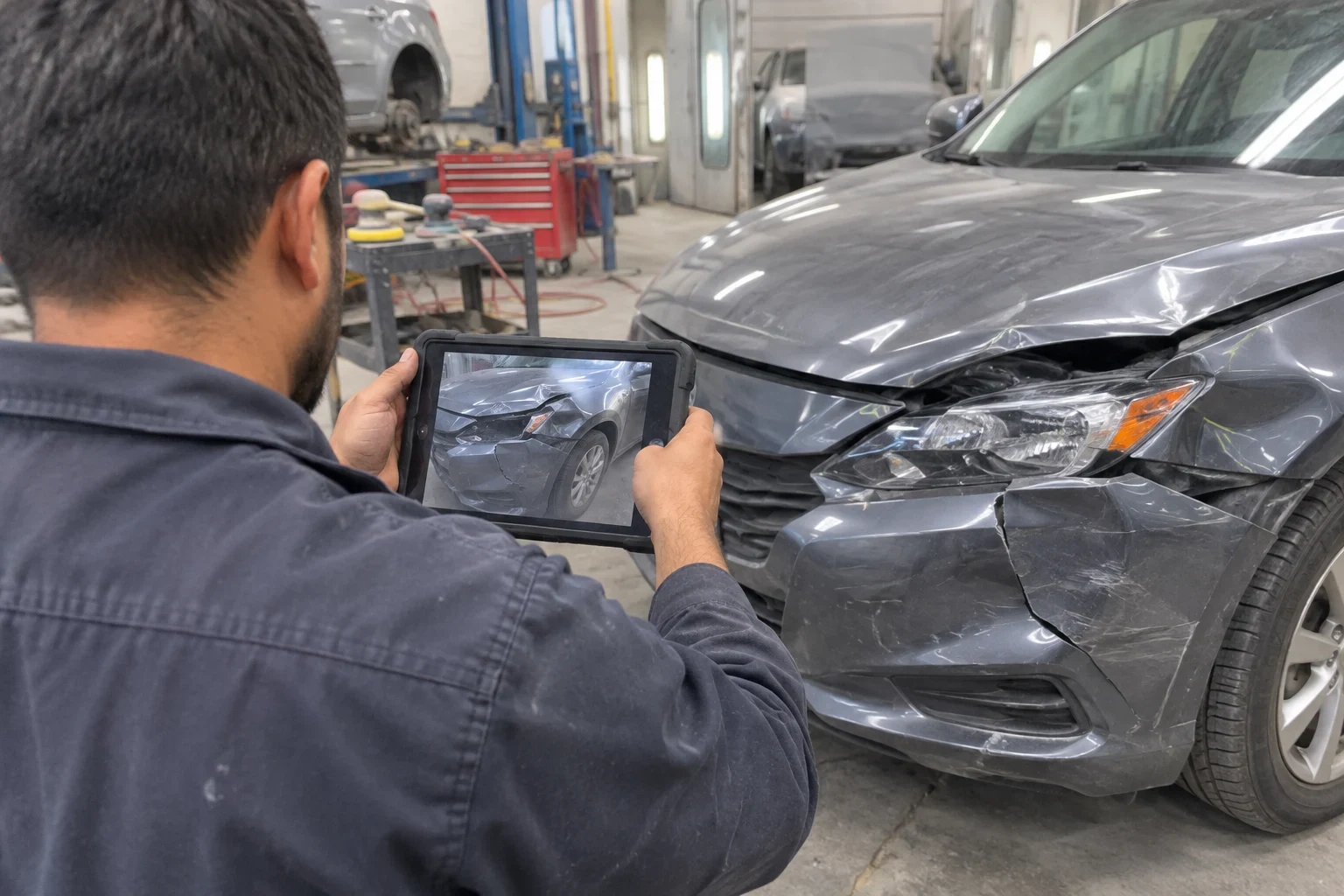
We list each part and labor item and photograph the damage. If the insurance claim is involved, we share that same estimate with your insurer.
- 3
Parts decisions with you
Before ordering, we go over part types and repair-or-replace calls. If teardown turns up hidden damage, we show you photos and explain it before doing extra work.
- 4
Repair, paint and reassembly
Structure first, then panels, then paint and blending. Trim, lights and sensors go back on and get checked.
- 5
Final check and pickup
We test drive the car, look over gaps and color in daylight and walk you around it when you pick it up.
What drives the price of collision repair
No two crashes leave the same damage, so we build the estimate from what we actually find on your car instead of a guess. Each part and labor item gets its own line, so nothing is buried in a single total. Here are the biggest factors behind that number.
- Panel material
- Aluminum panels take more time and specialized tools than steel, and they are replaced more often. Plastic covers are often cheaper to repair than to replace.
- Part type
- Original maker parts usually cost more than aftermarket or used ones. Fit, availability and what your insurer allows all play into which makes sense.
- Hidden and structural damage
- Bent supports, broken brackets or a shifted frame add labor that doesn't show from outside. Teardown is where these turn up.
- Sensors and electronics
- Cameras and radar units in bumpers and mirrors may need replacement and recalibration after the repair.
- Paint and blending
- Pearl and three-stage colors take more steps to match. Blending into nearby panels adds time but keeps the color even.
Collision repair questions
- Do I have to use the parts my insurance company picks?
- Your policy may set what the insurer will pay for, such as aftermarket or used parts. You can still ask about original maker parts and pay any difference if you want them. We explain the fit and finish differences so the choice is yours. Our insurance claims page covers more about working with your insurer.
- Is aluminum harder to repair than steel?
- Yes, in most cases. Aluminum doesn't have the same memory as steel and can crack if pushed too hard, so it needs slower work and separate tools. Some aluminum panels are best replaced, and we tell you when that's the case.
- Can my plastic bumper be fixed or does it need replacing?
- Scuffs, small tears and minor dents in a bumper cover can often be repaired and refinished. Broken mounting tabs, large tears or damage near parking sensors usually call for a new cover. Our bumper repair page goes into this further.
- What if you find more damage after taking the car apart?
- That's common, because the force of a crash travels past the outer skin into brackets and supports. When teardown turns up something new, we take pictures of it and update the estimate. Then we check in with you and your insurer, and no extra work starts until that conversation happens.
- Do you work on cars from towns nearby?
- Yes. Drivers from Reedley, Orosi, Selma and other towns around Dinuba bring their cars to us. You bring the vehicle to our shop and we handle the repair from there.
Get your car back on the road
Tell us what happened and what you're seeing on your vehicle. We'll set a time to look it over and walk you through the parts and repair choices.